Driving Technological Innovation: Projects of the Development Bureau and Works Departments Shine on the International Stage
|
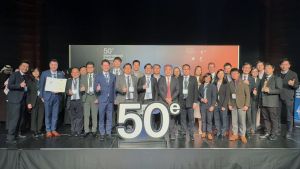
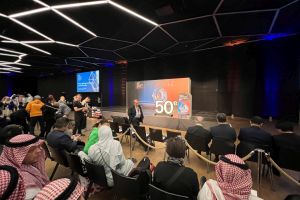
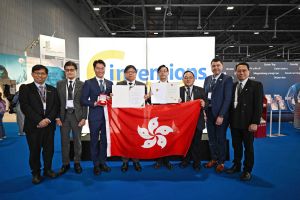
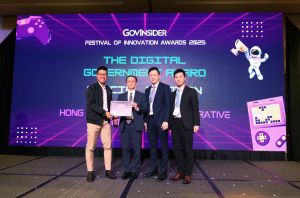
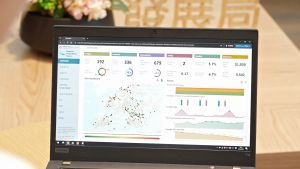
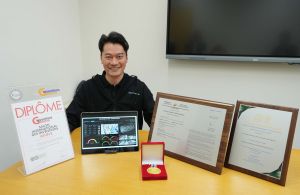
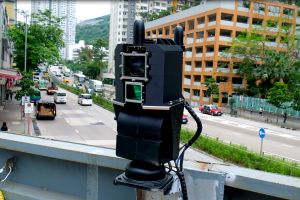
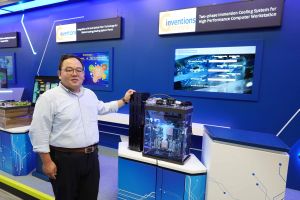
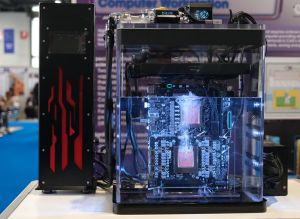
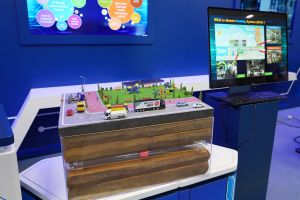
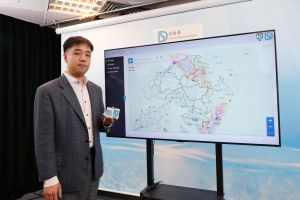
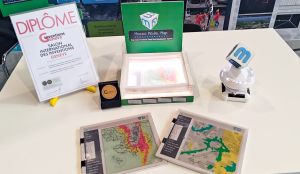
The Development Bureau (DEVB) is committed to promoting innovation within its departments by actively adopting advanced technologies and conducting research and development (R&D) for various technologies to break through limitations and enhance work efficiency. Recently, the R&D projects of our research teams have won multiple awards in international competitions, including 20 awards at the International Exhibition of Inventions of Geneva and special mention at the "GovInsider: Festival of Innovation Awards 2025" in Singapore. I have invited colleagues from the DEVB, the Electrical and Mechanical Services Department (EMSD), and the Drainage Services Department (DSD) to present the award-winning projects. 20 Awards at the International Exhibition of Inventions of Geneva, First "Digital Government Award" at Festival of Innovation Awards in Singapore In April this year, the DEVB, EMSD, and DSD showcased 18 invention projects at the 50th International Exhibition of Inventions of Geneva, winning a total of 20 awards, including the Prize of the Republic and Canton of Geneva, the Best International Invention & Innovation, three Gold Medals with the Congratulations of Jury, five Gold Medals, five Silver Medals and five Bronze Medals. The International Exhibition of Inventions of Geneva is a significant global annual event on inventions. About 1 050 inventions from 35 countries and regions were evaluated by the international jury of specialists. In addition, the DEVB received a special mention of “Digital Government Award” at the "GovInsider: Festival of Innovation Awards 2025" in Singapore in March this year. This annual award honours the outstanding achievements of public service departments in Asia-Pacific Region in digital transformation and innovation. This marks the first time the Government of the Hong Kong Special Administrative Region (HKSAR) has received this honour for its exceptional accomplishments in construction digitalisation, standing out from over 170 competing solutions from various countries. Self-developed “Integrated Capital Works Platform (iCWP)”: Consolidating and Analysing Project Data for Enhanced Efficiency and Effectiveness Assistant Secretary (Programme Management) of the DEVB, Mr LO Tsz-hing, Marcus, shares that as the DEVB is responsible for monitoring the delivery of public works projects, its team has developed the cross-departmental "Integrated Capital Works Platform (iCWP)" to collect and consolidate project performance data from various works departments more effectively. By consolidating and analysing key indicators including cost, progress, safety, quality, resources, as well as contractor and consultant management, the platform assists the management of various departments in grasping real-time data on project progress and performance, thereby enhancing the overall management efficiency and effectiveness of the capital works programme. The DEVB is currently applying artificial intelligence (AI) technology to strengthen data analysis for continuous platform enhancement. Early Detection, Timely Follow-up and Swift Resolution through Real-time Remote Monitoring of Construction Sites via "SmartEye" Project Engineer (Works Policies) of the DEVB, Ms SO Yuk-yin, Mia, says that “SmartEye”, a remote project supervision system cum integrated site management platform developed by the Works Branch of the DEVB, received the Best International Invention & Innovation (presented by the National Research Council of Thailand) as well as Silver Medal at the International Exhibition of Inventions of Geneva. The DEVB’s self-developed “SmartEye” adopts multiple innovative technologies, and its unique technological combinations and application designs are patented. Chief Assistant Secretary (Works) of the DEVB, Mr LIU Wan-fai, Edmond, introduces the operation of the system. The system first scans a construction site by 4D LiDAR, the data is then converted into a coloured spatial dataset, known as Point Cloud. Through edge computer processing and high-speed 5G transmission, the real-time site conditions are rapidly rendered in full 3D and displayed on an AI-driven dashboard. The management platform of “SmartEye” (Dashboard) offers a variety of functions, including the ability to send real-time alerts, assist with analysis, and support remote supervision, such as monitoring of project progress, quality management, measurement of dimensions and volumes, and even BIM (Building Information Modeling) design comparison. All these tasks can be conveniently completed via the Dashboard, allowing project management personnel to conduct real-time and around-the-clock remote site monitoring. Additionally, the system features a generative AI chatbot and automated report generation, providing solutions for engineering personnel while saving time. “SmartEye” is an all-in-one integrated smart site monitoring platform that enables effective collaboration among partners of the project team. It aims to achieve early detection, timely follow-up and swift resolution in site supervision, ensuring construction quality and safety while effectively managing on-site high-risk construction works. This system is currently being used in some public works projects. Immersion Cooling developed by the EMSD to facilitate Heat Dissipation of High-Performance Computers is successfully applied in the Civil Aviation Department The "Two-phase Immersion Cooling System for High Performance Computer Workstation", jointly developed by the EMSD and the Civil Aviation Department (CAD), won the Prize of the Republic and Canton of Geneva and Gold Medal at the 50th International Exhibition of Inventions of Geneva. The Prize of the Republic and Canton of Geneva signifies government-level honour and recognition for the winning project, marking the first time that departments of the Government of the HKSAR have received this prize. Engineer (Airport Services) of the EMSD, Mr LI Kin-pong, Richard, points out that AI requires support from a large number of high-performance computer workstations, and the higher the computing power of these workstations, the greater the heat generated. Traditional cooling methods rely on air conditioning for air cooling, the cooling efficiency of such methods is low with high energy consumption. Therefore, the team has developed an immersion cooling system to enhance cooling efficiency and reduce energy consumption for heat dissipation. The system works by immersing heat-generating computer components in a sealed container filled with a non-conductive coolant that has a low boiling point. When the temperature reaches 50 degrees Celsius, the coolant will absorb heat and boil, and the heat will automatically be removed through vaporisation. This method not only allows efficient heat dissipation to enable computers to operate at higher room temperatures, but also enhances equipment performance and extends the lifespan of computer components while reducing energy consumption. The system has been successfully applied in the air traffic control tower simulator of the CAD and is expected to be widely adopted in other fields in the future. Integration of AI and Optical Fibre for District Cooling/Heating System Plants Additionally, the "Integration of AI and Optical Fibre Technology for District Cooling/Heating System Plants" developed by the EMSD, also received the Gold Medal with the Congratulations of Jury at the exhibition of inventions. Engineer (Energy Efficiency) of the EMSD, Mr WONG Kwun-ping, Jairus, indicates that a number of chillers with different energy performances are installed in the central chiller plant of a district cooling system. The challenge lies in addressing the varying cooling demands of different types of buildings in the district, such as hospitals, offices, shopping malls, Mass Transit Railway stations, schools, etc. The team has developed a new system to consolidate weather data with AI to accurately predict the real-time total cooling demand of all buildings. AI can also analyse the big data on the operation of different types of chillers and suggest the most energy-efficient combination for operation, thereby enhancing efficiency and optimising system control and stability. At the same time, the EMSD’s team has applied optical fibre technology to monitor the condition of the chilled water pipes of the cooling system at more than five metres underground. Jairus explains that slight changes within the chilled water pipes, including temperature, pressure and sound, can affect the light reflection in the optical fibre. By analysing these subtle changes, the team can understand the condition of the chilled water pipes, thus enabling timely maintenance prior to any damage, and ensuring the system operates reliably and continuously. Coping with Extreme Weather Swiftly with the Real-Time Territorial Flood Risk Visualisation System developed by the DSD “Mosaic Model Map” (M³), a self-developed flood risk visualisation system of the DSD, won the Gold Medal with the Congratulations of Jury at the International Exhibition of Inventions of Geneva. Engineer (Drainage System Planning) of the DSD, Mr WONG Leonard Chek-yuet, points out that extreme weather events have become increasingly frequent in recent years. Traditional hydraulic models, which require hours for flood risk analysis, will create uncertainties in assessing flood risks as heavy rainstorms may come suddenly within a short time. To tackle this, DSD’s in-house team has developed M³, a real-time territorial flood risk visualisation system, which leverages hydraulic models to measure flood risks under over 3 000 pre-run simulated scenarios, taking into account varying rainfall and tidal conditions across different districts in the territory. The system operates on a round-the-clock basis, continuously collecting real-time hydrological measurement data as well as rainfall and tidal forecasts for the next one to two hours. By comparing the forecast data with pre-run simulations, it displays flood risks in varioius districts on the same platform, refreshing every six minutes. This enables DSD to identify areas with higher flood risk one to two hours prior to heavy rainstorms, which facilitates timely resource allocation for speedy deployment of emergency response teams to handle potential flood situations, such as clearing drainage channels, thereby minimising community disruption. I am thrilled to see the DEVB and the works departments actively embracing innovative technologies. Their research achievements have been remarkable and internationally recognised. I firmly believe that the team will continue striving to drive innovation, and transforming more research outcomes into practical solutions to enhance efficiency through technologies. |
|


11 May, 2025
Back