Quality greening and landscape planning: Building harmony between people and trees

The Development Bureau (DEVB) has long been promoting quality landscape planning, greening and sustainable tree management in accordance with the “right plant, right place” principle, with a view to enhancing urban liveability and public safety while fostering healthy tree growth. To help the public understand the effectiveness of the related measures and the way forward, I have invited colleagues from the DEVB’s Greening, Landscape and Tree Management Section to give an overview of recently completed open spaces and the latest developments in the pilot scheme on the “Suitability and Sustainability Assessment for Roadside Trees”, and District Council (DC) members to share their views on the related improvement works.

New parks completed in succession, incorporating multiple blue-green infrastructure elements

In recent years, we have incorporated blue-green infrastructure, water-embracing culture and inclusive design into landscape planning, with the aim of enhancing the community environment, strengthening Hong Kong’s resilience to climate change and providing the public with higher-quality public spaces. Mr Augustine LAM, Assistant Secretary (Greening and Landscape) of the DEVB, says that Tseung Kwan O South Park, which opened at the beginning of this year, and Sai Ying Pun Harbourfront Park, which opened at the end of last year, won the Gold and Silver Awards respectively in the “Excellence in Public Development” category of the Hong Kong Institute of Landscape Architects (HKILA) Awards 2025, fully demonstrating how the above principles have been put into practice.

Ms Vivian LEE, Assistant Secretary (Greening and Landscape) of the DEVB, introduces Tseung Kwan O South Park as a large-scale pilot project for climate-adaptive landscape, integrating the Sponge City Concept and Water-Sensitive Urban Design. To put it simply, the park harnesses natural elements such as terrain, soil and plants through landscape design to reduce flood risk and recycle water. The park features rain gardens, bioswales, a zero-irrigation garden, a detention lawn, permeable paving and an underground stormwater storage tank with a capacity of about 142 000 litres.

When it rains, stormwater first flows into the rain gardens, bioswales and detention lawns, where it percolates through plants and soil. It is then channelled through a pipe network into the underground storage tank, where it is stored for irrigation. Ms LEE notes that despite a recent downpour that nearly filled the detention lawns in Tseung Kwan O South Park, the water completely infiltrated within half a day and the lawn returned to its normal appearance.

She says that the park has a high greenery coverage, with more than 40 species of trees and over 80 species of shrubs and groundcovers. The design is both environmentally friendly and practical: it not only relieves pressure on the drainage system, but also enhances resilience to heavy rainfall and thus reduces the risk of flooding. In addition, the Architectural Services Department (ArchSD) introduces a thematic planting concept, with flowering trees such as Pink Trumpet Tree and Guangzhou Cherry planted in clusters at different corners of the park to beautify the landscape. Nectar plants such as Pink Powder Puff, Blood-flower Milkweed and African Lily are also planted to provide food sources for pollinating insects and enhance biodiversity. The park also features diverse inclusive spaces like inclusive play facilities, as well as educational panels with cartoon illustrations to promote the concept of climate resilience.

In addition to parks and plazas, the waterfront is also one of our landscaped spaces. Mr Augustine LAM says that Sai Ying Pun Harbourfront Park connects the waterfront promenades of Sun Yat Sen Memorial Park and the Western Wholesale Food Market, creating a high-quality public space that combines leisure and recreation with scenic appeal. He adds that Sai Ying Pun Harbourfront Park is characterised by a variety of flowering plants. The ArchSD has planted more than 140 trees in the park, including Pink Trumpet Tree, Spider Tree and Golden Rain Tree, so that the public can enjoy different scenery in all seasons. Moreover, the park’s grass mounds are planted with swaying Fountain Grass, complemented by shrubs and groundcovers of different textures, adding visual interest and enhancing the greenery effect along the waterfront.

Formulating appropriate maintenance or improvement plans to ensure the suitability and sustainability of roadside trees

Apart from contributing to quality landscape design, roadside trees can also beautify streets, provide shade for pedestrians, improve the microclimate and air quality, etc. In tree management, risk assessment is an important step in ensuring urban tree safety.

Ms Vivian LEE notes that tree management departments take timely mitigation measures each year for trees that have already shown health or structural problems to reduce risks. However, forward planning is also necessary for trees that have yet to pose an immediate danger but carry latent risks. In particular, with rapid urban development, many trees that were once well-suited to their original locations may become “out of place” as their surroundings change.

Mr Augustine LAM says that the DEVB has comprehensively reviewed the assessment criteria and scoring system for determining the suitability and sustainability of roadside trees, and launched a pilot scheme last year. He explains that the assessment criteria cover multiple factors, including the tree’s health and structural condition, the stress level and potential problems, the adequacy of growing space, the impact on pedestrians or road users, conflict with surrounding structures or facilities, and the characteristics of the tree species. By assessing roadside trees against these criteria, tree management departments prioritise them in a systematic manner and devise corresponding improvement measures or treatment options, so as to strike a balance among safety, landscape and sustainable development. The DEVB has already piloted the assessment and related improvement measures across districts, with completed projects on Tai Po Tai Wo Road, Hoi Lai Street in Sham Shui Po and Hennessy Road in Wan Chai.

New assessment criteria and scoring system piloted in Fo Tan: Measures to support long-term tree growth and improve pavements

Earlier, the DEVB piloted the assessment criteria and scoring system for determining the suitability and sustainability of roadside trees at Au Pui Wan Street in Fo Tan. Mr Augustine LAM points out that some trees there were confined in cramped tree pits, causing their roots to spread outward and lift the pavement while potentially increasing the risk of tree failure. The team carefully explored the feasibility of retention or transplantation. However, owing to site constraints, such as the trees abutting the road or buildings and lacking insufficient space for long-term growth, it ultimately adopted a comprehensive landscape improvement approach. The improvement works included enlarging tree pits, adding planters, replanting native tree species and flowering shrubs, and repaving the pavements.

These measures have not only supported the long-term healthy growth of trees, but have also significantly enhanced the urban landscape and spatial quality of the area. This shows that tree management is not simply a binary choice between “retaining or removing”, but a professional practice concerned with how trees and the urban environment can coexist harmoniously and develop sustainably.

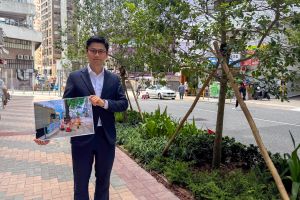
Mr CHAN Tan-tan, a Sha Tin DC member, says that some residents of Chun Yeung Estate and Sui Wo Court in the district who work nearby have reported that exposed roots of the original trees along Au Pui Wan Street had caused the pavement to heave, increasing the risk of trips and falls. He considers that there are trees unsuitable for roadside planting in Sha Tin and across the territory, and therefore supports the improvement measures. He hopes the Government will continue to maintain close communication with DCs in the future to enhance pedestrian safety.

Mr TANG Siu-fung, Calvin, a Sha Tin DC member, says the pavement looks completely different after the improvements. He notes that prior to the works, there were five large trees standing alongside the pavement, which had been lifted by root growth. The improvement measures included replanting suitable tree species and, more importantly, resurfacing the pavement to make it more even. He hopes this pilot approach and the improvement measures can be extended to other parts of Sha Tin.

Together we build a greener home

The goal of quality landscape planning and greening is to closely integrate urban development with tree conservation, creating a more liveable environment. We invite the public to work together with us to keep Hong Kong advancing towards long-term sustainable development.

Please click the image above to watch the video.
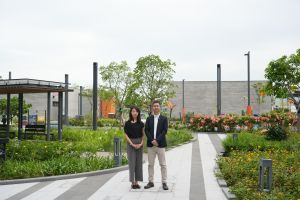
Mr Augustine LAM (right) and Ms Vivian LEE (left), Assistant Secretaries (Greening and Landscape) of the DEVB, introduce  Tseung Kwan O South Park, a recently completed open space, and the latest developments of the pilot scheme on the “Suitability and Sustainability Assessment for Roadside Trees”.
Mr Augustine LAM (right) and Ms Vivian LEE (left), Assistant Secretaries (Greening and Landscape) of the DEVB, introduce Tseung Kwan O South Park, a recently completed open space, and the latest developments of the pilot scheme on the “Suitability and Sustainability Assessment for Roadside Trees”.
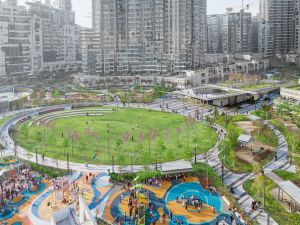
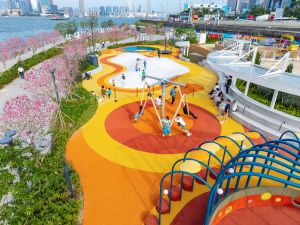
Tseung Kwan O South Park integrates landscape design with blue-green concepts to create a multi-functional space that not only enhances the community’s resilience to extreme rainfall but also connects residents’ lives.  The park fully opened in January this year and won the Gold Award in the “Excellence in Public Development” category at the HKILA Awards 2025 in April.
Tseung Kwan O South Park integrates landscape design with blue-green concepts to create a multi-functional space that not only enhances the community’s resilience to extreme rainfall but also connects residents’ lives. The park fully opened in January this year and won the Gold Award in the “Excellence in Public Development” category at the HKILA Awards 2025 in April.
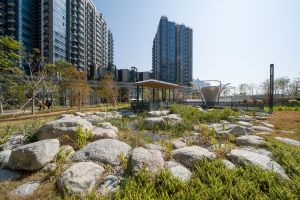
The “rain garden” uses plants and gravel to filter and temporarily store rainwater, and is equipped with real-time sensors to track performance on rainwater capture, making it one of Hong Kong’s first blue-green infrastructure facilities of its kind.
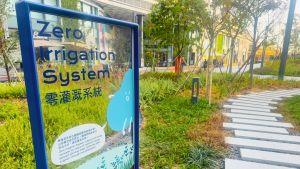
The “zero-irrigation garden” further exemplifies the concept of water recycling.  The system collects and stores rainwater in underground tanks, making it entirely self-sustaining and eliminating the need for external watering.
The “zero-irrigation garden” further exemplifies the concept of water recycling. The system collects and stores rainwater in underground tanks, making it entirely self-sustaining and eliminating the need for external watering.
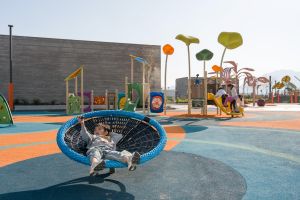
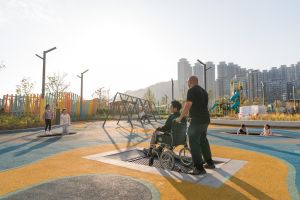
The park features a children’s cycling area, providing a safe environment for them to cycle.  It also offers inclusive play equipment designed for people of different ages and abilities, such as a trampoline with ramped edges to facilitate access by wheelchair users, promoting social inclusion.
The park features a children’s cycling area, providing a safe environment for them to cycle. It also offers inclusive play equipment designed for people of different ages and abilities, such as a trampoline with ramped edges to facilitate access by wheelchair users, promoting social inclusion.
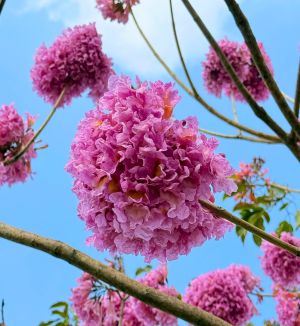
Tseung Kwan O South Park has introduced a variety of themed plantings, including the Pink Trumpet Tree that blooms spectacularly in mid-March every year, enhancing the visual appeal of the community space.
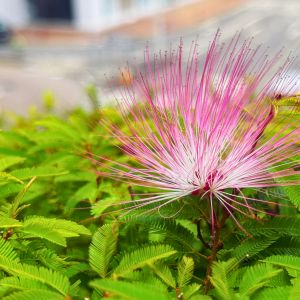
Tseung Kwan O South Park also features nectar plants such as Pink Powder Puff, Blood-flower Milkweed and African Lily.  Pictured is a Pink Powder Puff.
Tseung Kwan O South Park also features nectar plants such as Pink Powder Puff, Blood-flower Milkweed and African Lily. Pictured is a Pink Powder Puff.
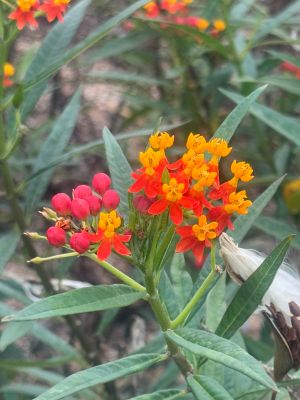
Tseung Kwan O South Park also features nectar plants such as Pink Powder Puff, Blood-flower Milkweed and African Lily. Pictured are Blood-flower Milkweeds.
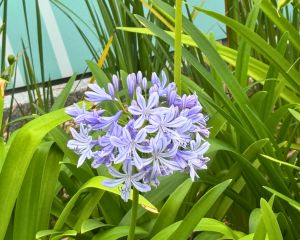
Tseung Kwan O South Park also features nectar plants such as Pink Powder Puff, Blood-flower Milkweed and African Lily. Pictured are African Lilies.
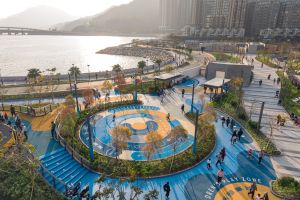
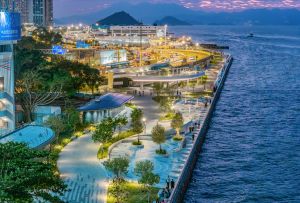
Featuring viewing platforms, inclusive play equipment and distinctive thematic designs, Sai Ying Pun Harbourfront Park offers a quality waterfront public space that combines leisure and recreation with scenic appeal.  The park earlier won the Silver Award in the “Excellence in Public Development” category at the HKILA Awards 2025.
Featuring viewing platforms, inclusive play equipment and distinctive thematic designs, Sai Ying Pun Harbourfront Park offers a quality waterfront public space that combines leisure and recreation with scenic appeal. The park earlier won the Silver Award in the “Excellence in Public Development” category at the HKILA Awards 2025.
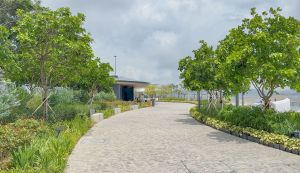
Sai Ying Pun Harbourfront Park is characterised by a variety of flowering plants, and the ArchSD has planted more than 140 trees in the park, including Pink Trumpet Trees, Spider Trees and Golden Rain Trees.
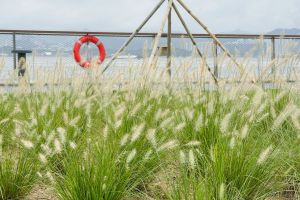
The grassy mounds in Sai Ying Pun Harbourfront Park feature swaying Fountain Grass, complemented by shrubs and ground covers of different textures, adding visual interest and enhancing the waterfront greenery.
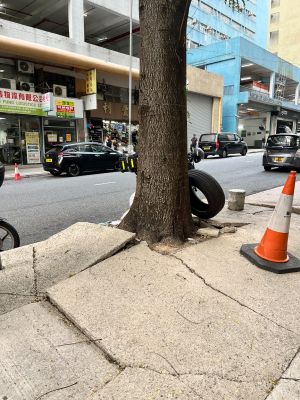
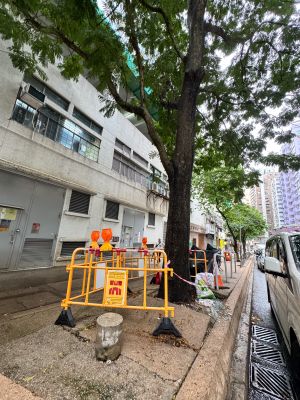
The confined tree pits at Au Pui Wan Street in Fo Tan caused the roots to spread outward and lift the pavement, compromising pedestrian safety and increasing the risk of tree failure.  After an assessment, the team concluded that site constraints made it necessary to remove some of the trees and redesign the landscape with species better suited to local conditions, so as to strike a balance between public safety and greenery.
The confined tree pits at Au Pui Wan Street in Fo Tan caused the roots to spread outward and lift the pavement, compromising pedestrian safety and increasing the risk of tree failure. After an assessment, the team concluded that site constraints made it necessary to remove some of the trees and redesign the landscape with species better suited to local conditions, so as to strike a balance between public safety and greenery.
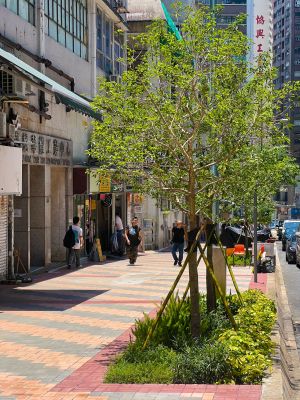
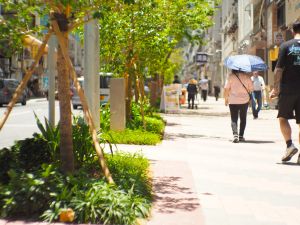
The improvement works were completed successfully, including repaving the pavement, adding planters, creating a continuous green belt to consolidate planting areas, and replanting with native trees and flowering shrubs.  Not only do these improvements support the long-term healthy growth of trees and enhance the landscape and spatial quality of the area, but the newly planted roadside trees also beautify the streets, provide shade for pedestrians, and improve the microclimate and air quality.
The improvement works were completed successfully, including repaving the pavement, adding planters, creating a continuous green belt to consolidate planting areas, and replanting with native trees and flowering shrubs. Not only do these improvements support the long-term healthy growth of trees and enhance the landscape and spatial quality of the area, but the newly planted roadside trees also beautify the streets, provide shade for pedestrians, and improve the microclimate and air quality.
Mr CHAN Tan-tan, a Sha Tin DC member, considers that there are trees unsuitable for roadside planting in Sha Tin and across all districts in Hong Kong, and therefore expresses support for the improvement measures.  He hopes the Government will continue to communicate closely with DCs in the future to enhance pedestrian safety.
Mr CHAN Tan-tan, a Sha Tin DC member, considers that there are trees unsuitable for roadside planting in Sha Tin and across all districts in Hong Kong, and therefore expresses support for the improvement measures. He hopes the Government will continue to communicate closely with DCs in the future to enhance pedestrian safety.
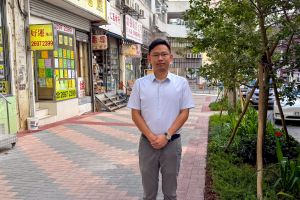
Mr Calvin TANG, a Sha Tin DC member, describes the improved pavement as entirely different from before.  He points out that prior to the works, there were five large trees standing alongside the pavement, which had been lifted by root growth.  The improvement measures included replanting suitable tree species and, more importantly, repaving the pavement to make it more even.
Mr Calvin TANG, a Sha Tin DC member, describes the improved pavement as entirely different from before. He points out that prior to the works, there were five large trees standing alongside the pavement, which had been lifted by root growth. The improvement measures included replanting suitable tree species and, more importantly, repaving the pavement to make it more even.

28 June, 2026

Back