“The Majestic Han: A Golden Age of Vigour and Cultural Integration”– Second Exhibition of the Golden Ages of Han and Tang Series
|
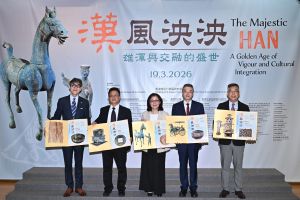
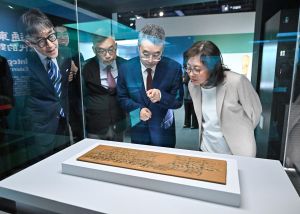
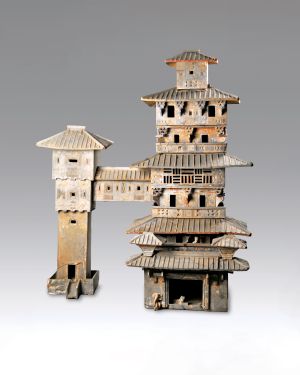
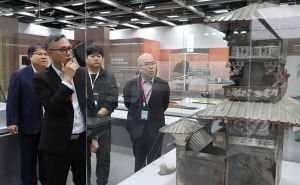
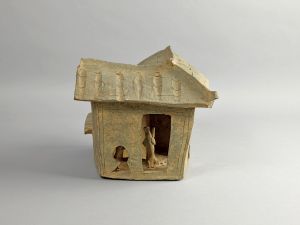
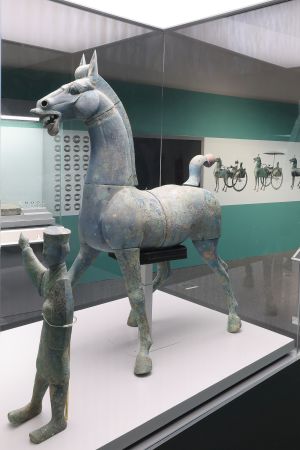
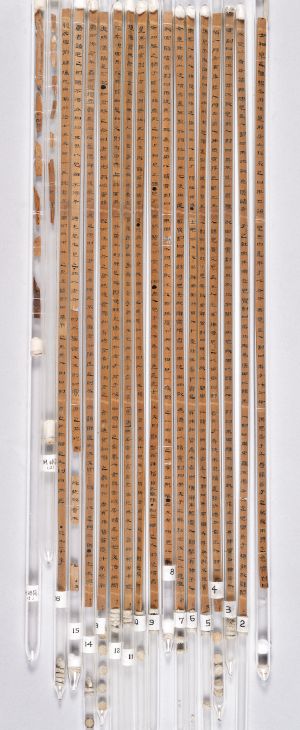
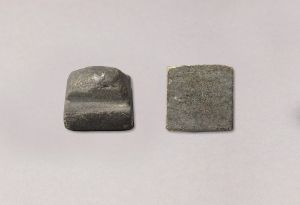
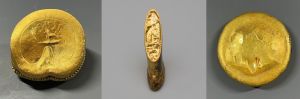
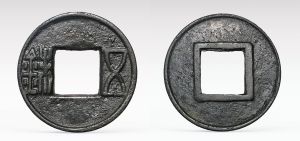
The Han and Tang dynasties were both golden eras in Chinese history, leaving behind a rich legacy of significant value for the Chinese nation. Following last year’s exhibition themed on the Tang dynasty, this year, we collaborate once again with the National Cultural Heritage Administration to present a large-scale exhibition of Han dynasty relics entitled “The Majestic Han: A Golden Age of Vigour and Cultural Integration”, the second exhibition of the Golden Ages of Han and Tang series. It also showcases Han dynasty artefacts unearthed in Hong Kong. From now until 20 September this year, members of the public are welcome to visit the exhibition at Hong Kong Heritage Discovery Centre with free admission. This time, I have invited my colleagues from the Development Bureau (DEVB) to introduce the exhibition. Building on the success of the well-received “Tang Vogue Beyond the Horizons” exhibition held last year with more than 127 000 attendance, “The Majestic Han” exhibition is presented this year The “Tang Vogue Beyond the Horizons: A Golden Era of Multicultural Integration and Openness” exhibition held last year was well-received by the public and visitors with more than 127 000 attendance. Building on the success of last year’s exhibition, this exhibition, themed on the Han dynasty, introduces its development in six areas: politics, economy, culture, science and technology, social life and external exchanges. A series of expert lectures, sharing sessions, fun days and other educational activities will also be held. “The Majestic Han” features a total of 252 pieces/sets of invaluable exhibits, with over 95% on view in Hong Kong for the first time “The Majestic Han” exhibition features a total of 252 pieces /sets of invaluable exhibits. Among them, 203 pieces/sets are on loan from 29 museums and cultural institutions across 14 provinces and autonomous regions of the Chinese Mainland, including 40 pieces/sets of grade-one cultural relics. Over 95% of these exhibits are being shown in Hong Kong for the first time, making this exhibition exceptionally precious. In addition to exhibits from the Chinese Mainland, the exhibition features 49 important Han-period artefacts unearthed in Hong Kong, including mingqi (funerary objects) in the form of pottery houses from the Lei Cheng Uk Han Tomb, and Han-period artefacts excavated from significant archaeological sites in Ma Wan, Tuen Mun, Sai Kung and other areas. These exhibits demonstrate that Han culture took root in the Lingnan region, including Hong Kong, as early as the Han dynasty. While offering Hong Kong residents and visitors a visual feast, the exhibition also brings together invaluable artefacts unearthed in both the Chinese Mainland and Hong Kong to convey narratives of the past. Bronze horse‑leading figurine and bronze horse unearthed in Mianyang, Sichuan vividly presents the prosperity of the Ancient Shu Road Mr Ricky Lau, Permanent Secretary for Development (Works), highlights the star exhibits of the exhibition: three large pottery granary house models unearthed in Jiaozuo, Henan. The five- and seven-storey pottery granary houses are multi-storey structures with front courtyards, integrating storage, residential living and defence in a single architectural form. For the seven-storey painted pottery granary house with linked pavilion, the main tower is linked to an auxiliary tower by an aerial gallery, demonstrating the superb and breathtaking architectural technology of the Han dynasty. Landlords in the Central Plains often showed off their enormous wealth through imposing granary houses, while vernacular houses in the Lingnan region were comparatively modest. The L-shaped pottery stilt-house model excavated from a Han tomb in Guangzhou features an upper floor that serves as the living hall, while the ground floor houses a pigsty and latrine. The two L‑shaped pottery house models unearthed from the Lei Cheng Uk Han Tomb in Hong Kong feature small courtyards at the back for raising livestock, and inside the houses are figures pounding rice, winnowing rice and holding a child. These vivid portrayals reflect the daily life of the ordinary people, particularly the farming households, of the Han dynasty. Mr Ricky Lau also introduces another set of invaluable artefacts in the exhibition: bronze horse-leading figurine and bronze horse with significant heritage value unearthed in Mianyang, Sichuan. The bronze horse, with its raised head and strong build, is the largest and most complete example of a Han dynasty bronze horse ever unearthed in China. Experts believe it represents the fine Ferghana horses introduced by Emperor Wu of Han from the Western Regions, commonly known as ‘elite steeds with crimson sweat’. Mianyang was a strategic town on the Ancient Shu Road, and horses were vital strategic resources during the Han dynasty. These two artefacts vividly present the prosperity of the Ancient Shu Road and reflect the elaborate burial customs of the time. Yi Li (Etiquette and rites) wooden slips, relatively complete surviving Western Han manuscript, testifies to the enduring influence of Han culture Han culture exerts a profound influence on later generations. Under the rule of Emperor Wu, Confucianism was promoted as the sole orthodoxy with the Hundred Schools suppressed, and five Confucian classics were established as orthodox classics: Shi (The classic of poetry), Shu (Book of documents), Li (Book of rites), Yi (I Ching) and Chun Qiu (Spring and Autumn annals). Li (Book of rites) consists of Zhou Li (Rites of Zhou), Yi Li (Etiquette and rites) and Li Ji (Record of rites) — which are collectively known as the “Three Li” (Three Ritual Classics). According to Mr Gary Poon, Deputy Secretary for Development (Works), the Yi Li (Etiquette and rites) wooden slips unearthed at Mozuizi in Wuwei, Gansu, noted for their neat handwriting, are relatively complete among the surviving Western Han manuscripts. Each chapter has its opening and closing sections, with the original chapter titles, end titles, page numbers and sequence preserved. These slips are of significant value for the study of Han dynasty classical studies and Yi Li (Etiquette and rites). The exhibition features the wooden slips of the chapter “Shi Xiang Jian” (When gentlemen meet) of Yi Li (Etiquette and rites), which outlines the etiquette governing social interactions among scholar-officials and aristocrats of the Han dynasty. In ancient China, seals served as tokens of power and credibility. A strict seal system was in place as early as the Han dynasty. Under the system, kings, dukes and marquises used gold seals; officials of a salary rank of two thousand shi used silver seals; and those below one thousand shi used bronze seals. Among the exhibits, the silver seal with tortoise-shaped knob is the official seal of a mid‑ranking Han official, while the clay seal impression with Chinese characters Ding Jie Zhi Yin (Seal of Dingjie) unearthed at Wuhua, Guangdong reflects that administrative documents were exchanged between Dingjie and Panyu, the seat of Nanhai Commandery. A Han dynasty square stone seal was unearthed at Kau Sai Chau, Sai Kung. This private seal is the only Han dynasty seal discovered in Hong Kong to date, reflecting Hong Kong was already influenced by the Han culture of the Central Plains at the time. Gold artefacts unearthed from the tomb of the Marquis of Haihun and Wuzhu bronze coins, the currency in circulation for the longest period in Chinese history According to Mr David Leung, Commissioner for Heritage of the DEVB, another striking highlight of the exhibition is the gold artefacts unearthed from the tomb of the Marquis of Haihun, Jiangxi. They include gold pieces in the form of niaoti hoof and linzhi hoof, along with gold discs. The discs served as currency for large‑scale transactions during the Han dynasty and a total of 385 pieces were unearthed from the tomb. In addition, four million Wuzhu bronze coins, strung in a group of one thousand, were unearthed from the tomb. Five strings of Wuzhu bronze coins, amounting to a total of five thousand pieces, are presented in the exhibition. Wuzhu bronze coins, introduced by Emperor Wu as the legal tender of the Han dynasty, were the currency in circulation for the longest period in Chinese history. They feature a round outer shape, symbolising the Mandate of Heaven, with a square hole in the centre representing imperial authority. This design established the traditional form for Chinese coinage from then on. Wuzhu bronze coins remained in circulation for 734 years until the introduction of Kaiyuan Tongbao coins by Emperor Gaozu of Tang. Furthermore, visitors to the exhibition can also view Wuzhu bronze coins unearthed at So Kwun Wat and Yung Long in Tuen Mun, Mai Po in Yuen Long, Kellett Island in Causeway Bay, and Tung Wan Tsai on Ma Wan. Their widespread circulation across the city indicates that there were frequent exchanges and commercial activities between the Central Plains and the Lingnan region as early as the Han dynasty. “The Majestic Han” exhibition runs until 20 September this year. Admission is free, and all are welcome to visit. I eagerly hope that through these invaluable artefacts, members of the public and visitors will learn more about the glorious history of the Han dynasty and appreciate the profound heritage of Chinese civilisation, and will discover a fresh perspective through the narratives conveyed by the artefacts from Hong Kong and the Chinese Mainland. For details on the exhibition, please visit the AMO’s dedicated webpage (https://www.amo.gov.hk/en/visitor-centre/exhibitions/heritage-discovery-centre/han-exhibition/index.html). |
|
19 April, 2026
Back