Barriers removed to facilitate the provision of pedestrian links by the private sector
|
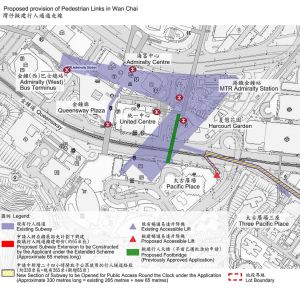
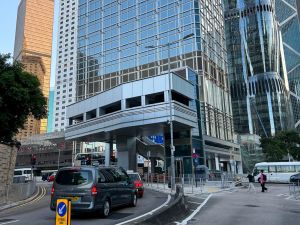
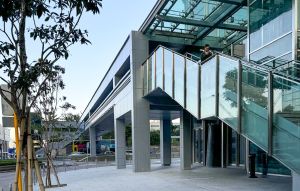
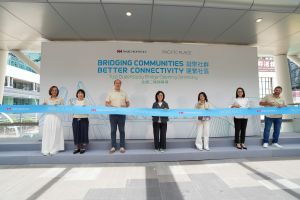
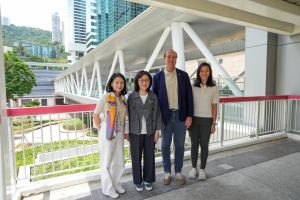
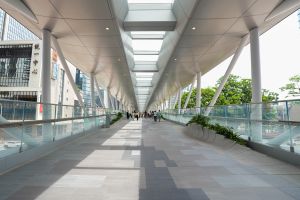
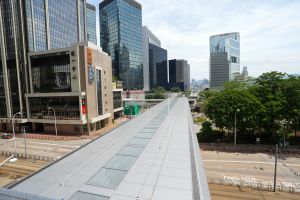
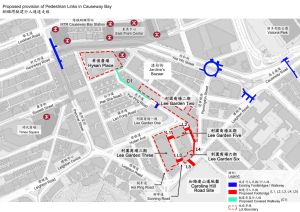
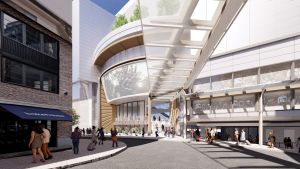
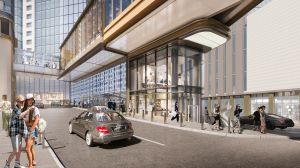
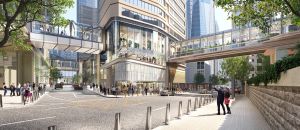
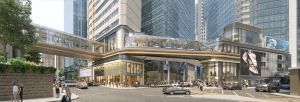
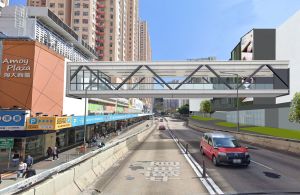
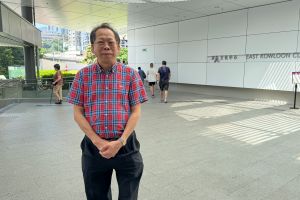
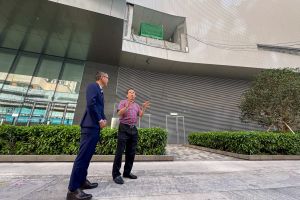
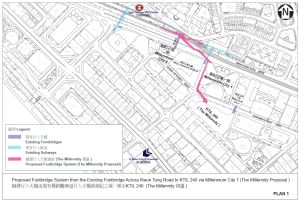
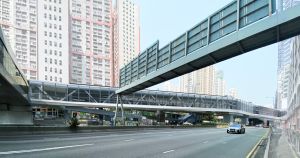
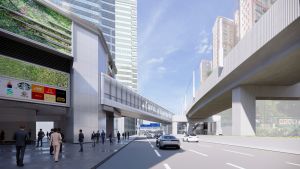
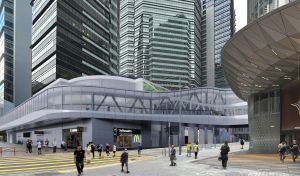
To enhance walkability and community connection, the Government has not only constructed pedestrian links on its own, but also encouraged the private sector to provide additional pedestrian links at suitable locations by providing incentive through land premium waivers, thereby benefiting our society as a whole. This policy has also been welcomed by both the community and private sector. This time, I have invited a colleague from the Development Bureau (DEVB) to introduce the relevant projects, as well as a District Council member and stakeholders to share their views. Provision of land premium waivers to encourage the private sector to provide pedestrian links According to Senior Engineer of the DEVB, Mr Matthew YUI, given that the provision of pedestrian links to connect shopping centres or commercial buildings would boost both the pedestrian flow and commercial value, the private sector was previously required to pay land premium in this regard; however, noting that the provision of additional pedestrian links and enhancement of accessibility could yield greater benefit for the community at large, the Government launched the policy of “facilitating the provision of pedestrian links by the private sector” to provide suitable incentive through waiving the land premium payable for lease modifications (commonly known as “premium waivers”) arising from the provision of pedestrian links, with a view to encouraging private participation in the construction of pedestrian linkage systems to facilitate early completion of the relevant facilities. Under the abovementioned policy, the private sector is responsible for the design, construction, management and maintenance of the pedestrian links and their associated costs, and the provision of barrier-free links for public use round the clock. Meanwhile, the Energizing Kowloon East Office and the Harbour Office (HO) under the DEVB are responsible for processing the relevant project applications, which are subject to an evaluation mechanism whereby the proposed pedestrian links are assessed as to whether benefits can be brought to the public. Factors for consideration include street walkability, area-wide connectivity, impact on the pedestrian networks to be connected and whether they are people-oriented. Other than Two Queensway Bridge and the footbridge across Harcourt Road connecting Cheung Kong Center II in Admiralty which have been completed recently, 10 other projects have been approved under the policy and associated works will commence progressively. These projects are located in areas with relatively higher pedestrian flows in Kowloon East, Wan Chai, Tsim Sha Tsui, Causeway Bay and Hung Hom. Walkability therein is expected to be enhanced in a progressive manner through the construction of new pedestrian links. Two Queensway Bridge officially opened in late April to connect Admiralty Station, government facilities and commercial buildings Co-ordinated by the HO under the DEVB and supported by the relevant departments, Two Queensway Bridge connecting Pacific Place and Harcourt Garden has been opened for use since late April. I have attended the opening ceremony for this project earlier. The footbridge is more than just a pedestrian link; it is a testament of how the Government and the private sector work hand-in-hand to enhance community connection and walkability by tapping on the policy. Other than daily use, Two Queensway Bridge provides an all-weather and barrier-free network connecting the harbourfront and the hinterland, facilitating pedestrian visits to our beautiful harbourfront where they can enjoy the unique scenery of the Victoria Harbour. Seamlessly integrating with the existing footbridge network in Admiralty, Two Queensway Bridge enables pedestrians to travel between the Admiralty MTR Station, government agencies and nearby commercial buildings without any obstruction, thereby further enhancing the existing elevated pedestrian network in the area. Tommy, who works at the Legislative Council Complex and frequently travels between different commercial areas in Admiralty and his workplace, is pleased with the commissioning of the footbridge. He used to take a rather circuitous route by walking through buildings such as United Centre and the Queensway Plaza, if he wanted to visit the shops in Pacific Place, but now there is a quicker way leading directly to Pacific Place. Miss Choi, who also works in Admiralty, finds it very convenient after the completion of the footbridge. Be it having lunch at Pacific Place or taking the bus home from the stop outside Pacific Place after work, she can save considerable time by skipping the indirect route which meanders through several footbridges. HO serving as a single window to co-ordinate and follow up on the construction of five footbridges connecting Lee Gardens, Hysan Place and Caroline Hill Road Separately, among the approved projects is the proposed pedestrian link project in Causeway Bay, under which five footbridges and a 100-odd-metre covered pedestrian walkway beginning from Hysan Place will be constructed to connect Lee Gardens One to Six and the commercial site at Caroline Hill Road; they are expected to be opened progressively for public use from 2026 onwards. The footbridges are set to divert pedestrians from the existing busy roads in Causeway Bay such as Yun Ping Road, Hysan Avenue, Pennington Street and Leighton Road, and serve as a more direct, safe and comfortable link. As the project involves multiple road sections and requires approval from different departments, the HO, which is responsible for processing the application, has been serving as a single window to co-ordinate the views of different parties and take follow-up actions. Take the process of lease modification as an example. The HO deals with and finalises the proposal details with the relevant departments, facilitating the smooth commencement of works in the relevant project. The Energizing Kowloon East Office (EKEO) assists with lease modification and project challenges to facilitate the implementation of a footbridge between Amoy Plaza and East Kowloon Culture Centre (EKCC) In addition to projects managed by the HO, the EKEO has been actively coordinating relevant projects in Kowloon East, including the footbridge connecting Amoy Plaza and EKCC initiated by private sector. Mr YUI mentioned that EKEO had been actively assisting the private sector with various problems encountered during the footbridge construction, as well as providing advices on lease modifications. The office had also facilitated inter-departmenal coordination to address project challenges, such as identifying works areas within the busy areas and assisting in managing the transportation of large footbridge components. The footbridge is expected to open to the public by mid-2026. Upon completion, the footbridge will provide a 24-hour barrier-free access between MTR Kowloon Bay station and Amoy Plaza via EKCC, significantly enhancing the pedestrian connectivity between Kowloon Bay Business Area and the residential neighborhood. Mr. Yip Hing-kwok, the Chairman of the Amoy Gardens Owners Committee (Phase II), has served the community for over 30 years. He recalled that residents often complained about the overcrowding on the footpaths between MTR Kowloon Bay MTR station to Amoy Gardens during peak hours, and the need to wait in long queues for traffic lights. He complimented the Government’s coordination with the private sector on the footbridge construction being a major meritorious achievement that would greatly benefit the whole community. Assist in researching footbridge alignment to overcome road restrictions, to facilitate the implementation of a new footbridge connecting to Kwun Tong Business Area In the Kwun Tong Business Area, the project for a footbridge across Kwun Tong Road and How Ming Street, proposed by private sector, had also been approved. The footbridge will connect to The Millennity, a commercial building on How Ming Street, via Millennium City 1 near MTR Ngau Tau Kok station. Mr YUI stated that EKEO had provided technical advices and support to the applicant during the project application process, such as giving suggestions on footbridge alignment to overcome restrictions from existing railway and carriageway. The office had been assisting the applicant in preparing proposals, optimizing the design and swiftly resolving technical issues through inter-departmental coordination. Construction work of the footbridge is expected to commence in 2026. District Councillor Mr. TAM Siu-cheuk (Kwun Tong West) viewed that the new footbridge will enhance the accessibility of Kwun Tong, strengthening the development of Hong Kong’s "CBD2" (the second core business district) and facilitating daily commute for the public. He acknowledged EKEO’s efforts in coordinating with the private sector and relevant government departments to tackle various challenges, which ultimately will improve the accessibility of Kwun Tong and alleviate vehicle-pedestrian conflicts in the area. I am pleased that the policy of facilitating provision of pedestrian links by private sector has been well-received by the community and the public. It exemplifies the Government’s successful collaboration with the private sector to leverage market strengths. The Development Bureau will continue to promote and optimize the policy to incentivize the private sector to invest in providing pedestrian footbridges and subways, thereby creating a more convenient, connected and high quality walking environment for the public. |
|
25 May, 2025
Back