60th anniversary of Dongjiang water supply to Hong Kong: “Dongjiang River — An Inseparable Bond, Our Blessed Origin”
|
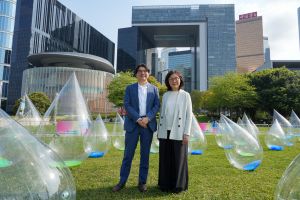
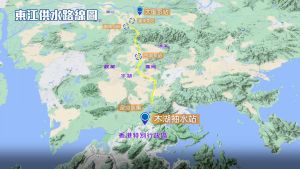
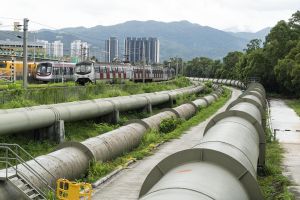
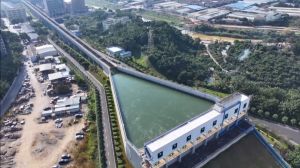
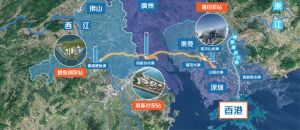
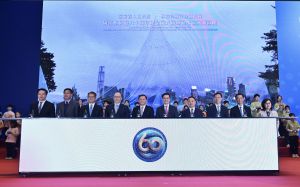
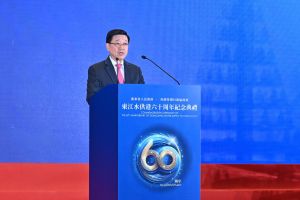
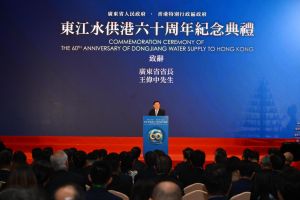
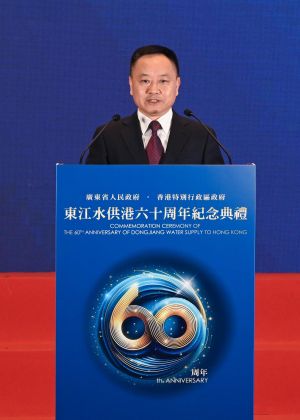
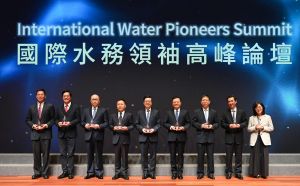
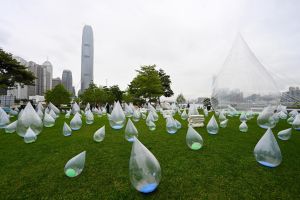
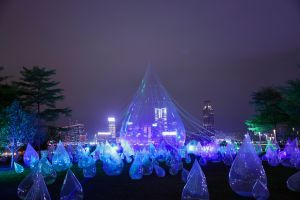
Dongjiang water has been supplied to Hong Kong since 1965, providing the city with an adequate and stable fresh water supply that allows residents to live and work in contentment. This is a testimony to the country’s long-standing care for Hong Kong. This year marks the 60th anniversary of Dongjiang water supply to Hong Kong, and we have organised a series of events under the theme “Dongjiang River — An Inseparable Bond, Our Blessed Origin” to commemorate and celebrate this important milestone. On this occasion, the Director of Water Supplies and I will describe the extensive efforts undertaken by the country to safeguard a high-quality water supply to Hong Kong, as well as the related commemorative and celebratory events. Fresh water resources scarce in Hong Kong; seawater desalination costs 20 to 30 per cent more than Dongjiang water Local rainwater yield is inadequate to meet Hong Kong’s fresh water demand. As such, the city relies primarily on Dongjiang water, a stable and reliable water source that currently accounts for 70 to 80 per cent of its fresh water consumption. There have been suggestions that Hong Kong should develop its own fresh water resources to replace the Dongjiang water supply. Mr Roger WONG, the Director of Water Supplies, explains that the primary objective of constructing the Tseung Kwan O Desalination Plant is to diversify Hong Kong’s water resources as a precaution against the impacts of climate change, rather than to replace Dongjiang water as the major source of water. In fact, seawater desalination costs 20 to 30 per cent more than importing Dongjiang water, making it not cost-effective as a primary source. Furthermore, the desalination process is energy-intensive, running counter to the global trend towards emissions reduction. The Mainland has forgone investment opportunities worth over $60 billion over the years to safeguard the quality of Dongjiang water As for the price to purchase Dongjiang water, Mr WONG says that it includes the costs associated with supplying Dongjiang water to Hong Kong, such as the costs for infrastructure, system operation and maintenance, as well as the cost of measures to safeguard water quality. However, the fees do not include the costs incurred by the Mainland for ecological conservation and in other related areas, such as control of development in protection areas along the Dongjiang River Basin and prohibition of activities such as quarrying, mining and large-scale livestock farming within those areas. Over the years, the Mainland has rejected hundreds of investment projects of varying sizes, with total investment of over $60 billion. In addition, over the past 60 years, the country has devoted substantial efforts and resources to numerous expansion and improvement works as well as ecological conservation measures, such as the construction of a dedicated aqueduct and river sewage diversion infrastructure, to safeguard the quality of the Dongjiang water supplied to Hong Kong. The Pearl River Delta Water Resources Allocation Project, commissioned last year, diverts water from the Xijiang River into Guangdong Province, helping ease the demand for Dongjiang water from cities along its course. It also provides Hong Kong with an emergency backup water source, enabling the Dongjiang and Xijiang rivers to complement each other. Hong Kong’s water charges rank 30th, well below those in other major international cities Hong Kong enjoys a stable water supply of safe and reliable quality, yet its water charges remain highly affordable. Mr WONG says that the current average household water bill is $44 per month, accounting for about 0.1 per cent of the median monthly household income. Nearly 20 per cent of consumers in Hong Kong pay no water charges due to their low consumption. According to survey data from the International Water Association, Hong Kong ranked 30th out of 39 capitals or major cities worldwide for water charges in 2023 (ordered from most to least expensive); this position is significantly lower than that of other major cities such as Seoul, Tokyo, Rome, Paris, Berlin and Washington, DC. As Hong Kong residents enjoy a reliable and quality water supply at an affordable price, it is all the more important for them to cherish water and avoid wasting this public resource. Commemoration Ceremony concludes: Hong Kong people hold the country close to their hearts and remember their blessed origin From assisting Hong Kong in coping with the droughts in the 1960s to ensuring a stable supply of Dongjiang water to Hong Kong, the country has contributed to the city’s development into an international metropolis it is today. Through a series of celebratory and commemorative events under the theme “Dongjiang River — An Inseparable Bond, Our Blessed Origin”, the Government seeks to deepen public understanding of the history of Dongjiang water supply and their appreciation of the country’s support in safeguarding the quality and quantity of the supply. Among these events, the governments of Guangdong and Hong Kong held the Commemoration Ceremony of the 60th Anniversary of Dongjiang Water Supply to Hong Kong cum Opening Ceremony of Dancing Water Drops Exhibition on 31 March to mark this meaningful milestone. Industry leaders from home and abroad gather to explore development of the water supply sector In addition, the Water Supplies Department (WSD), in collaboration with various professional institutes, organised the International Water Pioneers Summit under the theme “Smart Water‧High-Quality Development” on 1 April. The Summit brought together renowned pioneers, experts, academics and government leaders from the water supply sector around the world to explore new opportunities for water sector development and prospects for cooperation in areas such as smart water technologies and water security. It serves the purpose of broadening the sector’s horizons and promoting cross-boundary and cross-sector collaboration, while fully leveraging Hong Kong’s distinctive advantage of connecting the Mainland and the world. Largest-ever water drop installation on display in May The Dancing Water Drops Exhibition, specially created by internationally acclaimed artist Simon MA in celebration of the 60th anniversary of Dongjiang water supply to Hong Kong, features an 18.8-metre-tall giant water drop installation and over 100 smaller, roly-poly water drop installations of various sizes, allowing the public to view them up close. Through art, the exhibition highlights the vitality that Dongjiang water brings to Hong Kong, fosters a culture of social inclusion, and demonstrates the indomitable “roly-poly spirit” of Hong Kong people. On Mother’s Day, the largest giant water drop installation ever created by the artist, standing 28.8 metres tall, will makes its debut. It symbolises the country’s uninterrupted supply of Dongjiang water to Hong Kong over the past 60 years, much like a mother’s attentive care and profound love for her children. The Dancing Water Drops Exhibition is staged at Tamar Park and the Central and Western District Promenade (Central Section) from now until 13 June. Admission is free. Advance online booking is recommended. For details, please visit: https://www.wsd.gov.hk/en/public-relations/events/archive/index_id_428.html The WSD is charged with a heavy responsibility. We hope that through a series of activities, the public will gain a deeper appreciation of the significance of “our blessed origin” and understand the country’s immense support for Hong Kong. |
|

13 April, 2025
Back