The Nature Park and the Trial Nursery showcase the co-existence of development and conservation
|
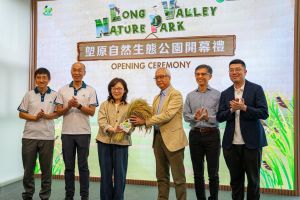
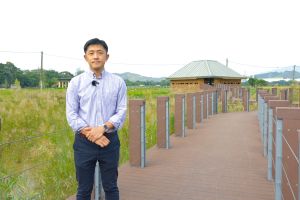
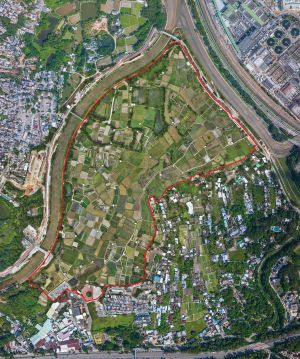
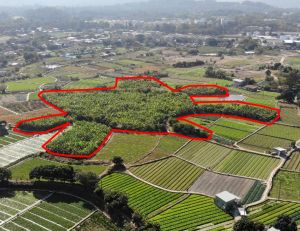
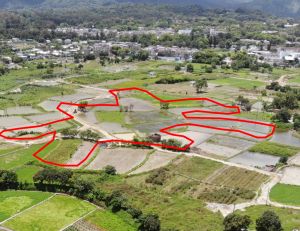
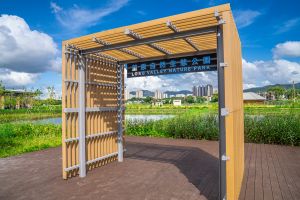
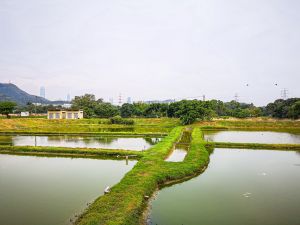
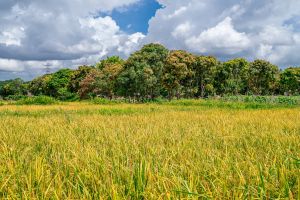
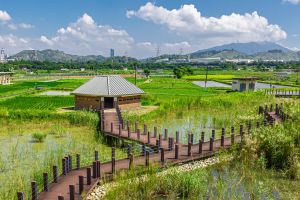
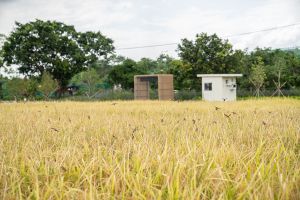
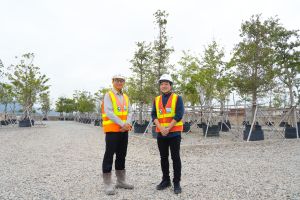
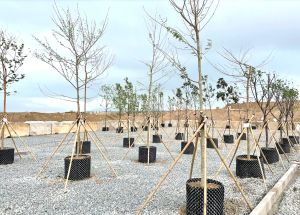
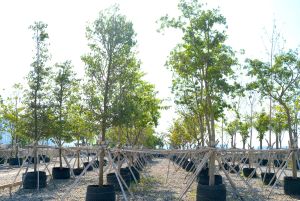
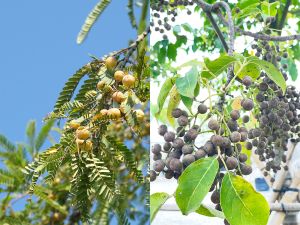
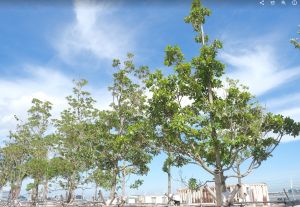
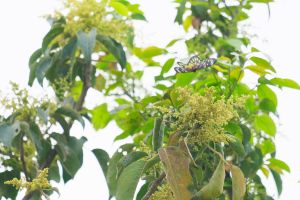
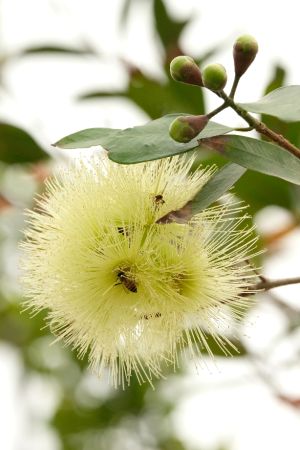
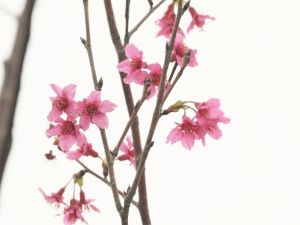
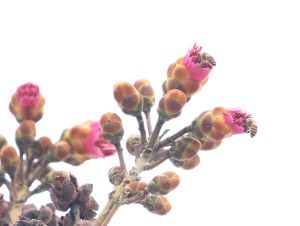
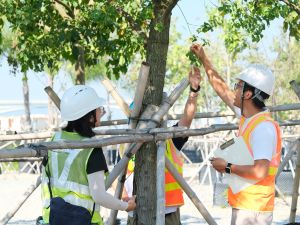
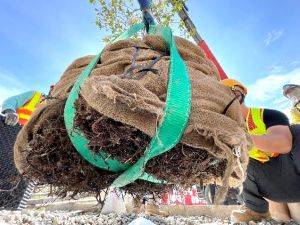
The Development Bureau (DEVB) is committed to enhancing the living environment of the public. While promoting development actively, we also attach great importance to nature conservation, with a view to developing a community ideal for living, working and traveling. For instance, the Long Valley Nature Park, which was officially opened to the public yesterday, is a successful example of how we take advantage of development opportunities for active conservation. In addition, the trial nursery set up in Tung Chung East New Town (Tung Chung East) also plays a role in promoting biodiversity and enriching the urban landscape in the area. This time, I have invited colleagues from the Civil Engineering and Development Department (CEDD) to introduce these two projects and share the experience of the engineering team in participating in conservation work. Co-existence of development and conservation in the Northern Metropolis, with Long Valley as a core component Senior Engineer of the CEDD, Mr CHAU Ha-lo, Ryan, says when taking forward the development of the Northern Metropolis, the Government also attaches great importance to enhancing the natural and ecological environment in the area. Long Valley, located between the Kwu Tung North New Development Area and the Fanling North New Development Area, is a core part of the development plan. The project team is committed to enhancing the ecological value and biodiversity of the wetland in the area through active conservation and restoration. Long Valley Nature Park officially opens to the public I attended the opening ceremony of the Long Valley Nature Park which was officially opened to the public yesterday. The park was designed and constructed by the CEDD and is under the management of the Agriculture, Fisheries and Conservation Department (AFCD). It covers an area of about 37 hectares and is divided into three management zones, namely the "Biodiversity Zone", "Agriculture Zone" and "Visitor Zone". The public can visit and watch birds freely in the "Visitor Zone", and can learn more about the "Biodiversity Zone" and "Agriculture Zone" through pre-arranged guided tours. For details, please visit the park website (https://www.lvnp.gov.hk). The "Biodiversity Zone" covers an area of about 21 hectares, which is the core conservation part in the nature park. The CEDD has restored some dry and abandoned farmland or farmland with relatively low ecological value into different wetland habitats, including shallow water ponds, water flea ponds, paddy fields and marshes. This has increased the wetland area of Long Valley from about 14 hectares to 22 hectares while maintaining the habitat diversity of Long Valley so as to provide a suitable environment for wild animals to forage, roost and breed. The "Agriculture Zone" covers an area of about 11 hectares. The farmland was restored by the CEDD two years ago for leasing to farmers for eco-friendly farming under the management of the AFCD. The CEDD has also built storage facilities and an irrigation channel of about 1.9 kilometres long with gabions. The "Visitor Zone" covers an area of about 5 hectares for providing visitor facilities and organising educational activities. It is equipped with facilities such as the Long Valley Nature Centre, a birding hut, a wetland square, boardwalks, etc. to enable the public to appreciate the different wetland habitats of Long Valley, gain a comprehensive understanding of the wetland ecosystem, and enhance their awareness of nature conservation. Close liaison and joint effort between the project team and the stakeholders for completion of the conservation project Mr Ryan CHAU expresses that this is his first time to participate in a project balancing engineering and conservation. As engineers may not have farming experience, we have taken into account the views of different parties during construction and maintained close communication and co-ordination with them for completing the project. In the meantime, the project also needs to address the needs of different stakeholders. For example, when carrying out the restoration works, the project team has regularly met with green groups and colleagues from the AFCD to find out where birds roost or breed during the breeding season, so as to avoid having construction vehicles pass through the relevant roads. In addition, under the guidance of the farmers in Long Valley, many paddy fields have been planted and water flea ponds have been restored to provide ample food for birds, thereby attracting more birds to forage there. Mr Ryan CHAU says that the park has attracted many different species of birds to Long Valley during the enhancement works, including the critically endangered yellow-breasted buntings, Black-winged Stilt with the first breeding record in Long Valley in 2021, and Lapland Longspur and Latham's Snipe which were first discovered in Long Valley in 2021 and 2023 respectively. Since the commencement of works in the end of 2019, the number of birds in Long Valley has increased by an average of about 20% to 40% in autumn and winter. The park has also become an important stop-over site for many migratory birds during their long migratory journeys. Therefore, he is happy to participate in this nature-based urban development integration project which proves that the restoration works have greatly enhanced the ecological value of and created a more diverse bird family in Long Valley. It stands as a successful example of "co-existence of development and conservation". Greening Vision of Tung Chung East New Town: Creating an all-round sustainable urban forest Greening measures help promote the sustainable development of new towns by enhancing both the quality of life of residents and the eco-efficiency of new towns along with urban development. As the infrastructural works of Tung Chung East are successively completed, the Sustainable Lantau Office (SLO) of the CEDD set up a trial nursery at Tung Chung East in early 2023. Through regular observation, proper care, and data analysis, the SLO can understand the growth performance of different tree species and identify suitable species for the future urban forest in Tung Chung East. Over 110 tree species with ecological and ornamental values are planted in the trial nursery Engineer (Lantau) of the CEDD, Mr CHEN Wing, explains that Tung Chung East is located along the coast, with a windy open environment, and high salt content in the sea breeze. After seeking the professional advice of the landscape architect, the team has piloted the planting of more than 110 tree species with ecological value and ornamental value on the waterfront of the newly reclaimed land in Tung Chung East, including native tree species that are more adaptable to urban environment, such as Phyllanthus emblica, Cratoxylum cochinchinense, and Machilus thunbergii. At the same time, the team has also selected tree species with ornamental value, such as Prunus campanulata and Cassia fistula, Cleistocalyx nervosum with tall and large tree crowns, and Sapium sebiferum and Ginkgo biloba that change with the seasons. Currently, the trial nursery with tree species planted on trial is not ready for public display yet. In the future, after proper transplantation, these trees will not only provide a habitat for the flora and fauna in the area and promote biodiversity, but also enable the public to enjoy a scenic habitat. Landscape Architect (Lantau) of the CEDD, Mr CHAN Chun-ho, states that the nursery has been set up for less than two years. Planted trees such as Prunus campanulata and Rhodoleia championii have successfully bloomed. Other species, including Phyllanthus emblica and Bischofia javanica, have also bloomed and produced fruit, successfully attracting birds, bees, and butterflies to stay and forage. This proves that the trees in the nursery have demonstrated certain ecological value. Mr CHAN says that after the completion of the trial next year, these trees, based on the test results and tree morphology, will be properly transplanted to the open space in Tung Chung East, where construction is about to begin. This advance tree-planting arrangement will help speed up the establishment of an urban forest. Continuous co-operation between engineers and landscape architects brings team spirit into full play Mr CHEN states that the daily work of engineers mainly focuses on civil engineering works involving reinforced concrete structures and underground pipelines. However, as development and conservation become increasingly important, engineers must take a further step. He is delighted to work with the landscape architect of the project team to plan greening work in advance, making the project more aligned with public expectations. He is pleased to apply his engineering knowledge to design a suitable drainage system for the trial nursery, such as gravel surfaces to facilitate drainage, support seedlings and reduce weeds. He also learned about various tree species and their growth characteristics, benefiting greatly from the entire project. In addition, the project team is contemplating a trial on floating planters on the sea near Tung Chung East. It plans to select native trees and nectar plants to create undisturbed ecological stepping stones on the sea as a stopover for birds and insects, which will help establish ecological corridors. The DEVB will continue to uphold excellent planning principles to strike a balance between development and conservation. |
|
10 November, 2024
Back